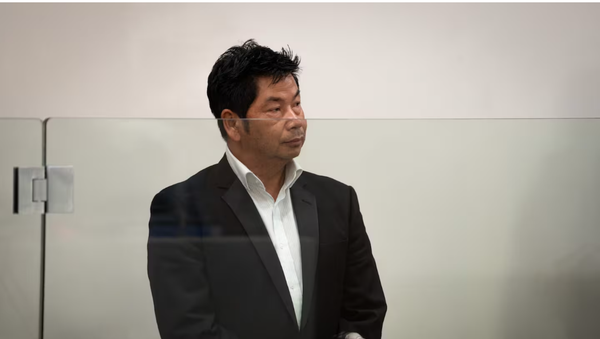
How New Zealand's Biggest Drug Importer Built an Empire Behind Legitimate Commerce
When inherited notoriety meets calculated ambition, the result can be a criminal enterprise that exploits global supply chains, corrupts community trust, and leaves a young man dead

On 2 March 2023, 21-year-old Aiden Sagala cracked open what he thought was a can of beer. It was labelled Honey Bear, a Canadian brand. It killed him.
His death was not the story investigators expected. What began as a tragic and seemingly isolated incident quickly unravelled into New Zealand's largest ever methamphetamine importation case — and exposed a sophisticated international trafficking network that had been hiding in plain sight for years.
At the centre of it was Baltej Singh, a then-33-year-old South Auckland businessman. Singh has been serving a 22-year sentence since February 2025, after pleading guilty to multiple drug trafficking charges, including the importation of more than 700 kilograms of methamphetamine disguised as beer, coconut water and kombucha.
For AML professionals, lawyers, and compliance officers, Singh's case is not simply a story about drugs. It is a case study in trade-based money laundering, the exploitation of legitimate commercial infrastructure, the role of inherited identity in criminal concealment, and the systemic vulnerabilities that allowed a criminal empire to accumulate tens of millions of dollars in real estate before anyone connected the dots.
A Family History That Changed Everything
To understand Baltej Singh's story, you must understand what preceded it.
Baltej is the son of Sarwan Singh Agwan, whose brother Satwant Singh was one of the two Sikh bodyguards who assassinated Indira Gandhi. That act, carried out in October 1984, sent shockwaves through Sikh and Hindu communities worldwide and set in motion a chain of events that would follow the family across continents.